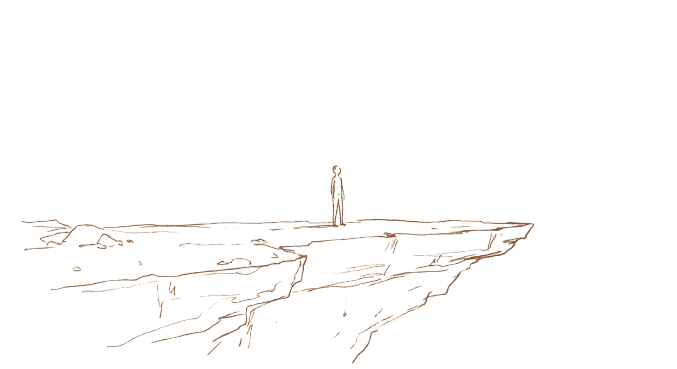
The Discomfort of Beginning
There is a specific kind of discomfort that comes with learning something new as an adult. Not the productive kind people talk about in podcasts. The kind that feels like regression — like you've spent years getting good at things, building a quiet competence, and then suddenly you're a beginner again and it turns out you forgot how that felt. My son is four. When something is hard — really hard, the kind that requires falling before you get it — his first instinct is often to stop. Skating. Cycling. Anything where the gap between trying and succeeding is immediate and visible.
We spend a lot of time teaching him that this is exactly the moment to stay. That difficulty isn't a signal to quit. That you try again, and again, and that's the whole thing. I think about that when I'm in my own version of the same moment. Nobody is teaching me that. I just have to remember it myself.
I came to AI from the edges of tech. Seven years in customer success at SaaS companies — close enough to product and engineering to understand the conversations, not close enough to be the one having them. Not a developer. Not quite not-tech either. Somewhere in the middle, which turns out to be its own kind of uncomfortable. The learning curve was real — not because the tools were impossible, but because being a beginner as an adult carries weight that it doesn't when you're a child.
You know what competence feels like. You've had it. And now you don't, and that contrast is uncomfortable in a way that's hard to explain without sounding dramatic. It doesn't go away. I'm not sure it's supposed to. What changes is something smaller — whether you treat the discomfort as a reason to stop, or just as information about where you are. You have to keep going anyway. Not because it gets easier, but because the alternative is staying still. And staying still has its own discomfort — the kind that's quieter and more permanent.
What AI did, oddly, was make the not-knowing slightly easier to be inside. Not because it got easier — but because the field is new enough that nobody has a long head start. There are no people who have been doing this for twenty years, watching you patiently while you catch up. Everyone is figuring it out. The discomfort is evenly distributed. The map doesn't exist. We're all just walking and drawing at the same time. Some days that feels like exactly the right place to be. Other days I'm still teaching myself what I keep teaching my son — that this is the moment to stay, not to stop. I'm still in that moment. Most days.